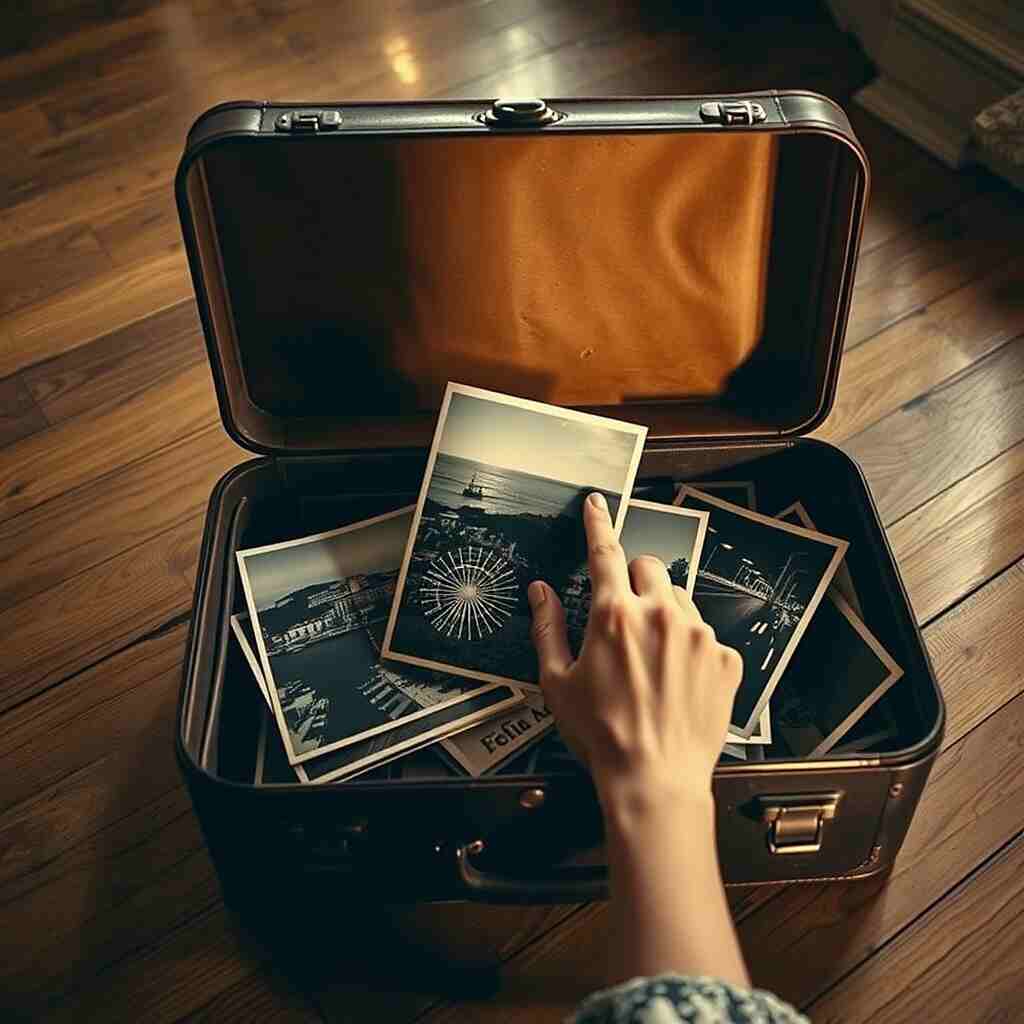
All My Cities represent the different chapters of my life. These chapters are etched into my memory like layers of Earth’s history. I was only eighteen when I first left my hometown. I carried a single suitcase and a heart full of uncertainty. Back then, I didn’t know where my path would lead. Eventually, I became a “Geologist of the Soul.” I began analyzing more than just stones. I started exploring the foundations of where we truly belong.
For years, I moved between countries and continents as a geological engineer. I stood in the persistent rain of Canada. Later, I rested under the warm palm trees of my Mediterranean home. Throughout it all, I was always a traveler in search of something deeper.
This story, All My Cities, is about a special photo album. It followed me everywhere as a silent witness to my transformations. People often asked me why I moved so often. They wondered why I eventually chose to return. They did not understand one simple truth. For some of us, identity is not a fixed point on a map.
We do not belong to just one place. Instead, we carry All My Cities within us. These places are woven into our memories and our stories. Each city left a sediment of wisdom in my soul. They are unique crystals of experience. To understand the psychology of relocation, you can read about the concept of home in modern society. In the end, All My Cities are not just locations. They are the tectonic plates of the woman I have become today.
Svi moji gradovi
Imala sam 18 godina kada sam otišla u drugi grad na studij. Nova studentska soba. Prazne police. Novi početak. Sve što je pripadalo mom starom životu stalo je u jedan kofer. Moje kolege uređivale su svoje sobe fotografijama, lampicama, suvenirima iz djetinjstva. Moja soba bila je gotovo prazna. Jedina stvar koju sam ponijela bio je fotoalbum — slike moje mame, mog tate i mene, slike mog grada i mog djetinjstva.
Moji novi prijatelji nisu znali kako sam živjela prije. Ali kada bi listali moj album, uvijek bi zastali i izustili istu riječ: “Wow.” Taj “wow” čula sam mnogo puta kroz život. Godinama kasnije otišla sam u drugu državu raditi kao inženjer geologije. Novi kontinent, novi ljudi, novi jezik. Opet sam bila stranac. I opet je sa mnom putovao isti fotoalbum.
Uvijek sam živjela u tuđim gradovima, gradovima gdje moji korijeni nisu bili. Kada bih se vraćala u svoj rodni grad, pokazivala sam ljudima slike gradova u kojima sam živjela. I opet bih čula ono poznato: “Wow.” No, tada sam čula nešto drugo. Kada sam se vratila u svoj rodni grad, prijatelji iz djetinjstva pitali su: “Zašto si se vratila?” To su bili isti ljudi o kojima sam pričala svima, a sada su me pitali zašto sam opet ovdje.
Kad sam živjela u Kanadi, pitali su me: “Kako možeš živjeti ovdje gdje stalno pada kiša? Tvoj rodni grad ima palme.” A kada sam se vratila u Split, opet sam čula isto pitanje: “Zašto si se vratila? Tamo je puno bolje.” Često su to govorili ljudi koji nikada nisu živjeli vani. Ljudi koji nikada nisu morali početi ispočetka u tuđem gradu.
Tada sam shvatila nešto jednostavno: bez obzira gdje živiš, uvijek će postojati neko mjesto za koje ljudi misle da bi tamo trebao biti. Ali možda je istina drugačija. Možda neki od nas nikada ne pripadaju samo jednom gradu.
Možda mi nosimo sve svoje gradove sa sobom — u uspomenama, u pričama i u jednom starom fotoalbumu koji putuje s nama kroz život.
J’avais 18 ans quand je suis partie dans une autre ville pour étudier. Une nouvelle chambre d’étudiante. Des étagères vides. Un nouveau départ. Tout ce qui appartenait à mon ancienne vie tenait dans une valise. Mes camarades décoraient leurs chambres avec des photos, des guirlandes, des souvenirs d’enfance. Ma chambre était presque vide. La seule chose que j’avais emportée était un album photo — des photos de ma mère, de mon père et de moi, des photos de ma ville et de mon enfance.
Mes nouveaux amis ne savaient pas comment je vivais avant. Mais quand ils feuilletaient mon album, ils s’arrêtaient toujours et prononçaient le même mot : « Wow. » Ce « wow », je l’ai entendu de nombreuses fois au cours de ma vie. Des années plus tard, je suis partie travailler dans un autre pays comme ingénieur géologue. Nouveau continent, nouveaux gens, nouvelle langue. J’étais à nouveau une étrangère. Et le même album photo voyageait avec moi.
J’ai toujours vécu dans des villes étrangères, des villes où mes racines n’étaient pas. Quand je retournais dans ma ville natale, je montrais aux gens des photos des villes où j’avais vécu. Et j’entendais à nouveau ce fameux : « Wow. » Mais alors, j’ai entendu autre chose. Quand je suis revenue dans ma ville natale, mes amis d’enfance m’ont demandé : « Pourquoi es-tu revenue ? » C’étaient les mêmes personnes dont je parlais à tout le monde, et maintenant ils me demandaient pourquoi j’étais de nouveau ici.
Quand je vivais au Canada, on me demandait : « Comment peux-tu vivre ici où il pleut tout le temps ? Ta ville natale a des palmiers. » Et quand je suis revenue à Split, j’ai encore entendu la même question : « Pourquoi es-tu revenue ? Là-bas c’est beaucoup mieux. » Souvent, ce sont des gens qui n’ont jamais vécu à l’étranger qui disaient cela. Des gens qui n’ont jamais eu à recommencer à zéro dans une ville étrangère.
Alors j’ai compris quelque chose de simple : peu importe où tu vis, il y aura toujours un endroit où les gens pensent que tu devrais être. Mais peut-être que la vérité est différente. Peut-être que certains d’entre nous n’appartiennent jamais à une seule ville.
Peut-être portons-nous toutes nos villes avec nous — dans les souvenirs, dans les histoires et dans un vieil album photo qui voyage avec nous à travers la vie.
Partagez cette histoire avec quelqu’un qui porte sa maison dans une valise.
All My Cities
I was 18 when I went to another city to study. A new student room. Empty shelves. A new beginning. Everything that belonged to my old life fit into one suitcase. My colleagues decorated their rooms with photos, fairy lights, childhood souvenirs. My room was almost empty. The only thing I brought was a photo album — pictures of my mom, my dad and me, pictures of my city and my childhood.
My new friends didn’t know how I lived before. But when they flipped through my album, they would always pause and utter the same word: “Wow.” I heard that “wow” many times throughout my life. Years later I went to another country to work as a geological engineer. New continent, new people, new language. I was a stranger again. And the same photo album traveled with me.
I always lived in foreign cities, cities where my roots were not. When I returned to my hometown, I showed people pictures of the cities I lived in. And again I would hear that familiar: “Wow.” But then I heard something else. When I returned to my hometown, childhood friends asked me: “Why did you come back?” These were the same people I talked about to everyone, and now they were asking me why I was here again.
When I lived in Canada, they asked me: “How can you live here where it rains all the time? Your hometown has palm trees.” And when I returned to Split, I heard the same question again: “Why did you come back? It’s much better there.” Often, this was said by people who never lived abroad. People who never had to start over in a foreign city.
Then I realized something simple: no matter where you live, there will always be some place where people think you should be. But maybe the truth is different. Maybe some of us never belong to just one city.
Maybe we carry all our cities with us — in memories, in stories, and in one old photo album that travels with us through life.