In life, nothing went according to plan. I started as a mineralogy engineer in Canada. I studied the earth and its rigid structures. But my soul needed a different kind of excavation.
I left the mines for the world of poetry. It was a terrifying tectonic shift. Yet, it was the only way to find my true voice. We often fear when nothing went according to plan. We think the cracks are failures. In reality, those cracks let the light in.
I moved to France and chose a new path. My engineering background helps me understand the soul. I am now a Geologist of the Soul.
Every difficult moment was a necessary sediment. Peace is found in accepting the chaos. Embrace your own journey today.
Ništa nije išlo po planu
U svijetu geološkog inženjerstva, plan nije prijedlog; to je sveti dokument. Kada imate posla s milijunima tona stijena i nepredvidivim temperamentom kanadskog permafrosta, odstupanje od nacrta može značiti razliku između uspješne sezone i katastrofalnog kolapsa. Provela sam petnaest godina živeći po planu. Moj kalendar bio je mreža smjena, uzoraka jezgri i sigurnosnih protokola. Moj život bio je dobro podmazan stroj, kalibriran za izvlačenje vrijednosti iz smrznute zemlje.
Plan je bio jednostavan: odraditi svoje vrijeme na Sjeveru, popeti se na korporativnoj ljestvici i umiroviti se uz udobnu mirovinu i zbirku priča koje vjerojatno nikada neću ispričati. Ja sam bila ona pouzdana. Ona koja je gledala krajolik i vidjela gradijente tlaka umjesto ljepote. Ona koja je vidjela dijamant i razmišljala o njegovoj industrijskoj tvrdoći umjesto o njegovom sjaju.
Ali svemir ima osebujan način rješavanja planova. On se ne bori protiv njih; on jednostavno uvede “kvar”. Počelo je u utorak, u 4:00 ujutro, usred zime koja se činila kao da nikad neće završiti. Stajala sam u zapovjednom centru, gledajući seizmičke podatke. Sve je bilo po planu. Ali dok sam zurila u zelene linije na monitoru, jedna jedina misao doletjela je u moj um, nepozvana i potpuno izvan scenarija: Je li to sve?
To je bila prva pukotina u nacrtu. Od inženjera se ne očekuje da postavlja egzistencijalna pitanja u 4 ujutro. Inženjer bi trebao optimizirati. Ali pitanje se zadržalo, poput zrna pijeska u preciznom motoru. U roku od nekoliko mjeseci, plan se počeo otapati. Ne zbog kvara u rudniku, već zbog pomaka u mojim unutarnjim tektonskim pločama.
Počela sam nositi malu bilježnicu u kožnom uvezu u džepu svog reflektirajućeg prsluka. Dok su moje kolege tijekom pauze za ručak raspravljale o okretnom momentu, ja sam potajno pisala stihove o tome kako Aurora Borealis izgleda poput prolivene tinte preko nebesa. Pisala sam o tišini koja se osjećala kao živo biće. Padala sam na životnom planu, i po prvi put u 5475 dana, osjećala sam se uistinu živom.
Dan kada sam konačno odlučila otići bio je ultimativni “kvar” plana. Moja obitelj nije razumjela. Moje su kolege mislile da sam podlegla “kabinskoj groznici”. Imali su plan da odem terapeutu, pa na dugi odmor, pa da se vratim u jamu. Pustila sam ih da misle što žele. Ali moj vlastiti plan se promijenio. Nisam išla na tropsku plažu na oporavak; išla sam u malo selo u Francuskoj početi ispočetka. Mijenjala sam svoj geološki čekić za nalivpero.
Kada sam stigla u Francusku, ni tamo ništa nije išlo po planu. Mislila sam da ću sjediti u kafićima i da će pjesme teći iz mene poput vode. Umjesto toga, sjedila sam u kafićima i osjećala se kao uljez. Govorila sam tri jezika, ali činilo se da niti jedan od njih nema riječi za tranziciju koju sam prolazila. Bila sam inženjer koji nije mogao pronaći sintaksu za vlastitu dušu. Preselila sam se s mjesta gdje je sve bilo mjereno na mjesto gdje ništa nije bilo sigurno.
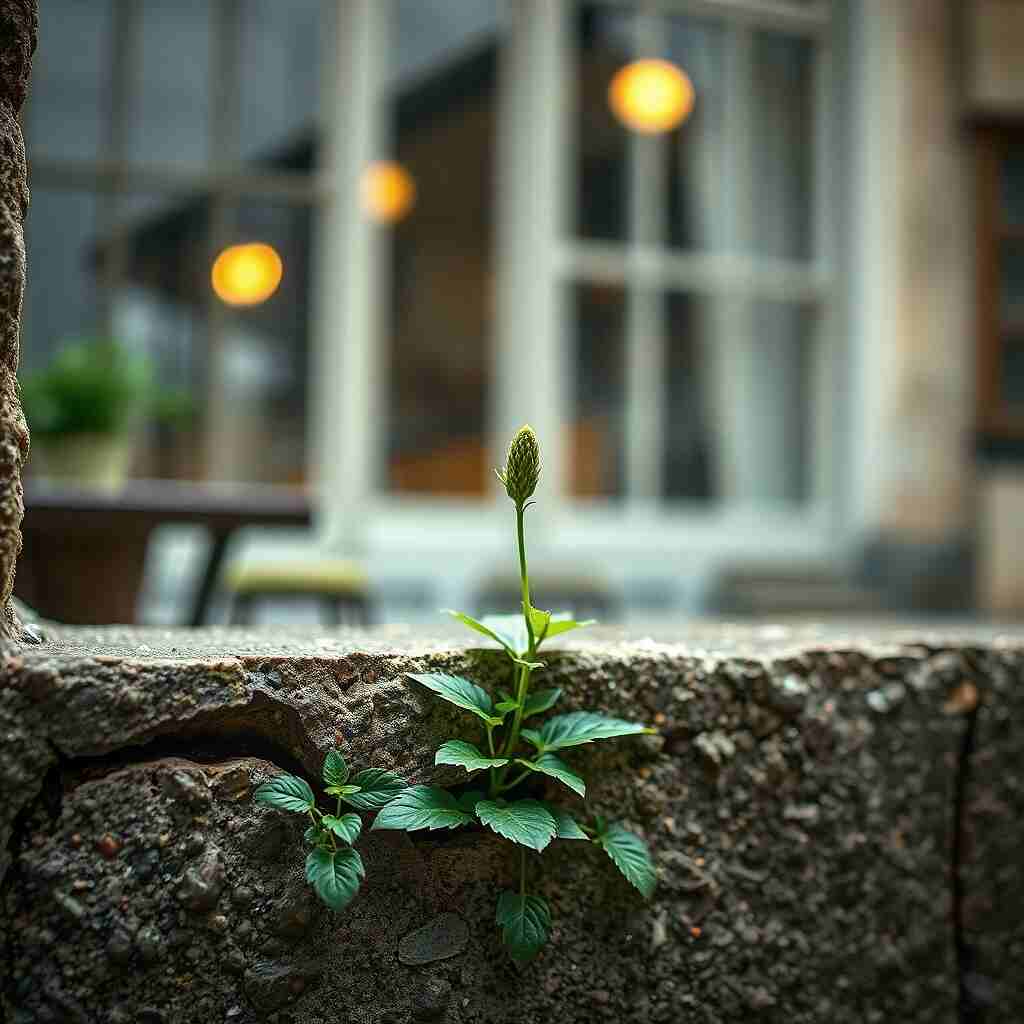
Jednog poslijepodneva, oluja je pogodila selo. Nije to bio ubitačan vjetar Yukona; bila je to meka, uporna europska kiša. Planirala sam prošetati do pošte kako bih poslala rukopis — zbirku mojih 170 priča. Ali kiša je bila prejaka, a pošta se zatvorila ranije. Još jedan osujećen plan. Sklonila sam se u mali ulaz kako bih pričekala da pljusak prođe. Tamo, prislonjena uz drevni kameni zid, vidjela sam malu biljku kako raste iz pukotine na pločniku. Bio je to običan korov, ali je napredovao na najnegostoljubivijem mjestu, hranjen upravo onom kišom koja mi je uništila poslijepodne.
Tada sam shvatila da najljepše stvari na svijetu ne slijede nacrte. Dijamant nije dio “plana” Zemlje — on je rezultat ekstremnog, neplaniranog pritiska. Pjesma nije dio logičnog “plana” — ona je rezultat emotivnog kvara. Cijeli moj život u Kanadi bio je posvećen sprječavanju pukotina, ali svjetlost je konačno ulazila upravo kroz pukotine.
Vratila sam se u svoj mali stan, mokre odjeće i uništenog “plana” za taj dan. Otvorila sam laptop i počela pisati. Nisam pisala priče za koje sam mislila da ih ljudi žele čuti — herojske priče o rudarstvu. Pisala sam o neuspjehu. Pisala sam o strahu od prazne stranice. Prestala sam pokušavati konstruirati svoju sudbinu i počela sam je živjeti.
Ništa nije išlo po planu. Izgubila sam karijeru, rutinu i identitet koji sam nosila kao oklop. A u zamjenu, pronašla sam sebe.
Ja sam Magma Star. Inženjerka koja je naučila da su najstabilnije strukture one koje se znaju saviti.
I danas sam točno tamo gdje trebam biti, čak i ako to nikada nisam planirala.
Ja sam Magma Star. Inženjerka koja je naučila da su najstabilnije strukture one koje se znaju saviti.
I danas sam točno tamo gdje trebam biti, čak i ako to nikada nisam planirala.
Rien ne s’est passé comme prévu
Dans le monde du génie géologique, un plan n’est pas une suggestion ; c’est un document sacré. Quand on a affaire à des millions de tonnes de roches, un écart par rapport au plan peut faire la différence entre un succès et un effondrement catastrophique. J’ai passé quinze ans à vivre selon le plan. Ma vie était une machine bien huilée, calibrée pour extraire de la valeur de la terre gelée.
Le plan était simple : faire mon temps dans le Nord, gravir les échelons et prendre une retraite confortable avec une collection d’histoires que je ne raconterais probablement jamais. J’étais la personne fiable. Celle qui regardait un paysage et voyait des gradients de pression au lieu de la beauté.
Mais l’univers a une façon particulière de gérer les plans. Il ne les combat pas ; il introduit simplement un “bug”. Cela a commencé un mardi, à 4 heures du matin. J’étais dans le centre de commande, regardant les données sismiques. Tout se passait comme prévu. Mais en fixant les lignes vertes sur le moniteur, une seule pensée a dérivé dans mon esprit : Est-ce que c’est tout ?
C’était la première fissure dans le plan. Un ingénieur n’est pas censé se poser des questions existentielles à 4 heures du matin. Mais la question a persisté, comme un grain de sable dans un moteur de précision. En quelques mois, le plan a commencé à se dissoudre. Non pas à cause d’une défaillance dans la mine, mais à cause d’un déplacement de mes plaques tectoniques internes.
J’ai commencé à porter un petit carnet relié en cuir. Pendant que mes collègues discutaient de la capacité de charge, j’écrivais secrètement des vers sur la façon dont les aurores boréales ressemblaient à de l’encre renversée. J’échouais dans le plan de ma vie, et pour la première fois en 5 475 jours, je me sentais vraiment vivante.
Le jour où j’ai finalement décidé de partir a été l’échec ultime du plan. Ma famille n’a pas compris. Mes collègues pensaient que j’avais succombé à la “fièvre de la cabane”. Mais mon propre plan avait changé. Je n’allais pas sur une plage tropicale pour récupérer ; j’allais dans un petit village en France pour recommencer. J’échangeais mon marteau géologique contre un stylo-plume.
Quand je suis arrivée en France, là non plus, rien ne s’est passé comme prévu. Je pensais m’asseoir dans des cafés et que les poèmes couleraient de moi comme de l’eau. Au lieu de cela, je me sentais comme une usurpatrice. J’étais un ingénieur trilingue qui ne trouvait pas la syntaxe pour sa propre âme.
Un après-midi, une tempête s’est abattue sur le village. J’avais prévu de marcher jusqu’à la poste pour envoyer un manuscrit. Mais la pluie était trop forte, et la poste a fermé plus tôt. Encore un plan contrecarré. Je me suis abritée dans une petite embrasure de porte. Là, j’ai vu une petite plante pousser d’une fissure dans le trottoir. C’était une mauvaise herbe commune, mais elle prospérait dans l’endroit le plus inhospitalier.
J’ai réalisé alors que les plus belles choses du monde sont celles qui ne suivent pas le plan. Un diamant ne fait pas partie du “plan” de la terre — c’est le résultat d’une pression extrême et imprévue. Un poème n’est pas le résultat d’un plan logique — c’est le résultat d’un bug émotionnel. Toute ma vie au Canada avait consisté à prévenir les fissures, mais c’est seulement à travers les fissures que la lumière entrait enfin.
Je suis retournée dans mon appartement. J’ai ouvert mon ordinateur portable et j’ai commencé à écrire. Je n’ai pas écrit les histoires de l’ingénierie. J’ai écrit sur l’échec. J’ai écrit sur la peur de la page blanche. J’ai arrêté d’essayer de construire mon destin et j’ai commencé à l’habiter.
Rien ne s’est passé comme prévu. J’ai perdu ma carrière et l’identité que je portais comme une armure. Et en échange, je me suis trouvée.
Je suis Magma Star. L’ingénieur qui a appris que les structures les plus stables sont celles qui savent se plier.
Et aujourd’hui, je suis exactement là où je suis censée être.
Je suis Magma Star. L’ingénieur qui a appris que les structures les plus stables sont celles qui savent se plier.
Et aujourd’hui, je suis exactement là où je suis censée être.
Nothing Went According to Plan
In the world of geological engineering, a plan is not a suggestion; it is a sacred document. When you are dealing with millions of tons of rock and the volatile temperament of the Canadian permafrost, a deviation from the blueprint can mean the difference between a successful season and a catastrophic collapse. I spent fifteen years living by the plan. My calendar was a grid of shifts, core samples, and safety protocols. My life was a well-oiled machine, calibrated to extract value from the frozen earth.
The plan was simple: serve my time in the North, climb the corporate ladder, and retire with a comfortable pension and a collection of stories that I would probably never tell. I was the reliable one. The one who looked at a landscape and saw pressure gradients instead of beauty. The one who saw a diamond and thought of its industrial hardness rather than its sparkle.
But the universe has a peculiar way of dealing with plans. It doesn’t fight them; it simply introduces a “glitch.” It started on a Tuesday, at 4:00 AM, in the middle of a winter that felt like it would never end. I was standing in the command center, looking at the seismic data. Everything was according to plan. But as I stared at the green lines on the monitor, a single thought drifted into my mind, unbidden and completely off-script: Is this all there is?
That was the first crack in the blueprint. An engineer isn’t supposed to ask existential questions at 4:00 AM. An engineer is supposed to optimize. But the question lingered, like a grain of sand in a precision engine. Within months, the plan began to dissolve. Not because of a failure in the mine, but because of a shift in my internal tectonic plates.
I started carrying a small, leather-bound notebook in the pocket of my high-visibility vest. While my colleagues were discussing torque during lunch breaks, I was secretly writing lines of verse about the way the Aurora Borealis looked like spilled ink across the heavens. I was writing about the silence that felt like a living thing. I was failing at my life’s plan, and for the first time in 5,475 days, I felt truly alive.
The day I finally decided to walk away was the ultimate “failure” of the plan. My family didn’t understand. My colleagues thought I had succumbed to “cabin fever”. They had a plan for me to see a therapist, take a vacation, and return to the pit. I let them think what they wanted. But my own plan had changed. I wasn’t going to a tropical beach to recover; I was going to a small village in France to start over. I was trading my geological hammer for a fountain pen.
When I arrived in France, nothing went according to plan there, either. I thought I would sit in cafes and the poems would flow out of me like water. Instead, I sat in cafes and felt like an impostor. I spoke three languages, but none of them seemed to have the words for the transition I was experiencing. I was a trilingual engineer who couldn’t find the syntax for her own soul.
One afternoon, a storm hit the village. It wasn’t the violent wind of the Yukon; it was a soft, persistent European rain. I had planned to walk to the post office to send off a manuscript—a collection of my 170 stories. But the rain was too heavy, and the post office closed early. Another plan thwarted. I ducked into a small doorway to wait out the downpour. There, leaning against the ancient stone wall, I saw a small plant growing out of a crack in the pavement. It was a common weed, but it was thriving in the most inhospitable place, fueled by the very rain that had ruined my afternoon.
I realized then that the most beautiful things in the world are the ones that don’t follow the blueprint. A diamond isn’t part of the earth’s “plan”—it’s a result of extreme, unplanned pressure. A poem isn’t part of a logical “plan”—it’s a result of an emotional glitch. My entire life in Canada had been about preventing cracks, but it was only through the cracks that the light was finally getting in.
I went back to my small apartment, my clothes damp and my “plan” for the day in ruins. I opened my laptop and started to write. I didn’t write the heroic tales of mining. I wrote about the failure. I wrote about the fear of the blank page. I stopped trying to engineer my destiny and started to inhabit it.
Nothing went according to plan. I lost the career I had built, the routine I had mastered, and the identity I had worn like a suit of armor. And in exchange, I found myself.
I am Magma Star. I am the engineer who learned that the most stable structures are the ones that know how to bend.
And today, I am exactly where I am supposed to be, even if I never planned to be here.
I am Magma Star. I am the engineer who learned that the most stable structures are the ones that know how to bend.
And today, I am exactly where I am supposed to be, even if I never planned to be here.