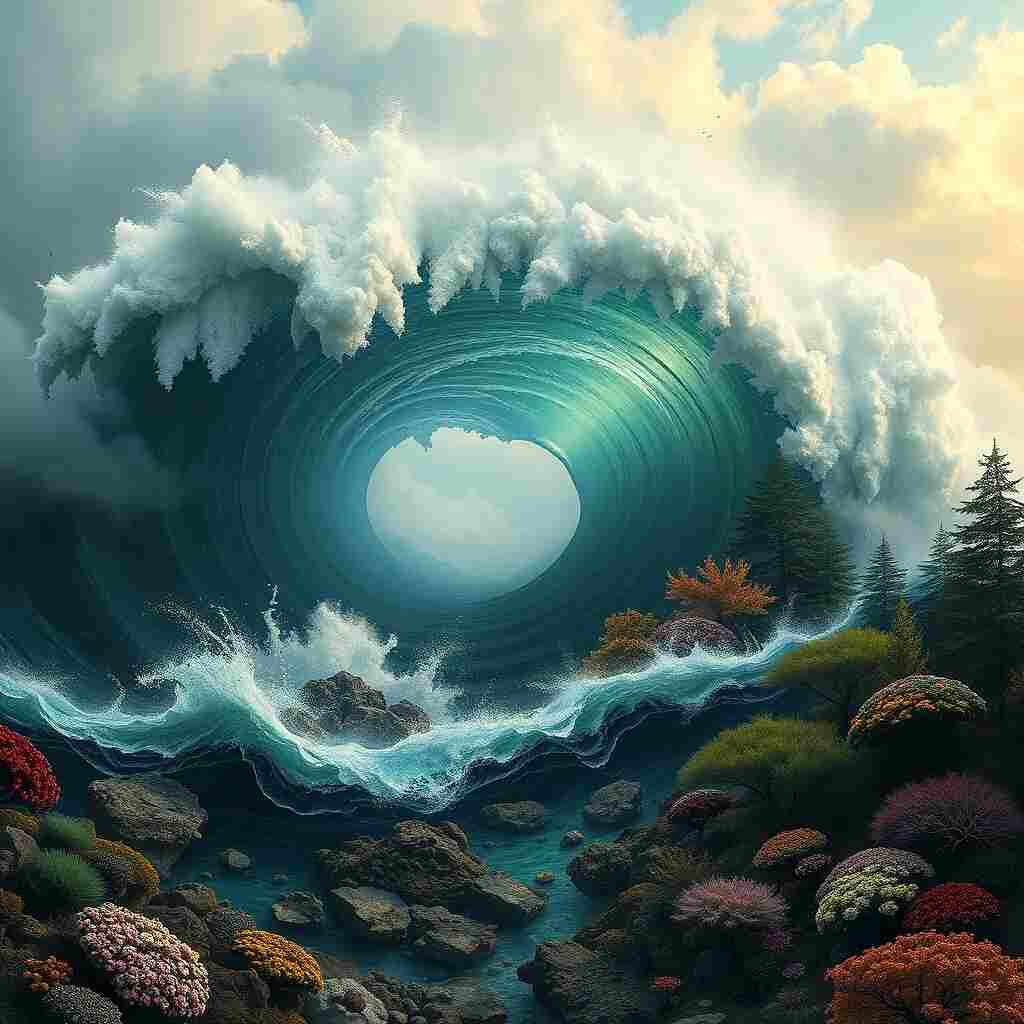
If the Ocean Could Speak, it would share a story of deep change and silent pain. For years, I listened to the sea as a calm lullaby. But today, the sound is much heavier. This reflection, If the Ocean Could Speak, is about our broken relationship with the planet. We see glaciers melting and coral reefs losing their color. These are not just climate data points; they are signs of a deep imbalance. As a former engineer, I understand the mechanics of change. However, as a poet, I feel the soul of the water.
Protecting our oceans is not about politics; it is an act of love and survival. We must listen to the silent warning of the deep blue. As I explored in my previous post about When I Drink My Wine, everything we create comes from the earth. We are part of this ecosystem. We are not its masters. If we continue to take without giving back, the consequences will be severe. Let us protect the guards of our Earth before it is too late. To understand the urgency, you can explore the latest reports on ocean heat content and marine life.
Kad bi ocean mogao govoriti, plakao bi
Nekada sam slušala more kao uspavanku. Tiho. Beskrajno. Umirujuće. Danas zvuči drugačije. Ne glasnije — nego teže. Kao da nešto drevno pokušava doprijeti do nas. I u toj tišini osjetiš optužbu.
Naši oceani imaju groznicu. Toplina koju smo ispustili u zrak polako tone u njihove dubine. Nevidljivo. Upornije nego što želimo priznati. Mijenja struje. Pomjera vrste. Remeti ravnoteže starije od našeg postojanja. To nisu samo klimatski podaci. To je bol.
Glečeri se tope — postojano, poput suza koje ne prestaju kliziti niz lice planeta. Razina mora raste kao da voda želi uzeti natrag ono što joj je oduzeto. Dijete rođeno danas možda nikada neće vidjeti koraljni greben kakav smo mi poznavali. Koraljni grebeni, ti tihi vrtovi ispod površine, gube boju. Postaju blijedi duhovi u plavetnilu.
Ribe odlaze prema hladnijim vodama, bježe iz doma koji više ne prepoznaju. Oluje postaju snažnije, kao da vjetar i valovi pokušavaju probuditi naš duboki, ugodni san. A ipak — priroda nije samo rana. Postoji biće veće od svega što smo izgradili, a toliko nježno da ga se nitko ne boji. Ne prijeti. Štiti. Stoji tiho, ukorijenjeno u strpljenju. Čuvar koji je svjedočio rađanju, rastu i umiranju — iznova i iznova.
Ne traži pažnju. Samo daje. Mravi nalaze zaklon pod njegovim koracima. Ptice mir u njegovu krilu. Ljubavnici obećanja u njegovoj sjeni. Djeca sigurnost ispod njegovih grana. Nema datum smrti. Samo cikluse. Bez njega zrak bi postao tanji. Bez oceana nebo bi se promijenilo. Bez tih tihih čuvara Zemlje — sve bi utihnulo.
Mi govorimo o klimatskim promjenama kao o raspravi. One to nisu. One su odnos. I mi smo ga prekršili. Uzimali smo više nego što smo davali. I sada nas čekaju posljedice. More će preživjeti. Ptice će pronaći sklonište. Planeta će se vratiti. Pitanje je — hoćemo li mi?
Nitko nam nije oduzeo budućnost. Mi je trošimo sami.
Zaštita oceana nije politika. Zaštita šuma nije ideologija. To je čin ljubavi. Čin opstanka.
Podijeli ovaj poziv na buđenje s onima koji vole Zemlju.
Si l’océan pouvait parler, il pleurerait
Autrefois, j’écoutais la mer comme une berceuse. Calme. Infinie. Apaisante. Aujourd’hui, elle sonne différemment. Pas plus fort — mais plus lourd. Comme si quelque chose d’ancien essayait de nous atteindre. Et dans ce silence, on sent une accusation.
Nos océans ont de la fièvre. La chaleur que nous avons libérée dans l’air s’enfonce lentement dans leurs profondeurs. Invisible. Plus tenace que nous ne voulons l’admettre. Elle change les courants. Déplace les espèces. Perturbe des équilibres plus vieux que notre existence. Ce ne sont pas seulement des données climatiques. C’est une douleur.
Les glaciers fondent — constamment, comme des larmes qui ne cessent de couler sur le visage de la planète. Le niveau de la mer monte comme si l’eau voulait reprendre ce qui lui a été pris. Un enfant né aujourd’hui ne verra peut-être jamais un récif corallien tel que nous l’avons connu. Les récifs coralliens, ces jardins silencieux sous la surface, perdent leur couleur. Ils deviennent des fantômes pâles dans le bleu.
Les poissons partent vers des eaux plus froides, fuyant un foyer qu’ils ne reconnaissent plus. Les tempêtes deviennent plus fortes, comme si le vent et les vagues tentaient de réveiller notre sommeil profond et confortable. Et pourtant — la nature n’est pas seulement une blessure. Il existe un être plus grand que tout ce que nous avons construit, et si doux que personne ne le craint. Il ne menace pas. Il protège. Il se tient silencieux, enraciné dans la patience. Un gardien qui a été témoin de la naissance, de la croissance et de la mort — encore et encore.
Il ne demande pas d’attention. Il ne fait que donner. Les fourmis trouvent un abri sous ses pas. Les oiseaux la paix dans son giron. Les amants des promesses dans son ombre. Les enfants la sécurité sous ses branches. Il n’a pas de date de mort. Seulement des cycles. Sans lui, l’air deviendrait plus mince. Sans l’océan, le ciel changerait. Sans ces gardiens silencieux de la Terre — tout se tairait.
Nous parlons du changement climatique comme d’un débat. Ce n’en est pas un. C’est une relation. Et nous l’avons brisée. Nous avons pris plus que nous n’avons donné. Et maintenant, les conséquences nous attendent. La mer survivra. Les oiseaux trouveront un abri. La planète reviendra. La question est — est-ce que nous, nous reviendrons ?
Personne ne nous a pris notre avenir. Nous le dépensons nous-mêmes.
Protéger les océans n’est pas de la politique. Protéger les forêts n’est pas une idéologie. C’est un acte d’amour. Un acte de survie.
Partagez cet appel au réveil avec ceux qui aiment la Terre.
If the Ocean Could Speak, It Would Cry
I used to listen to the sea like a lullaby. Quiet. Endless. Soothing. Today it sounds different. Not louder — but heavier. As if something ancient is trying to reach us. And in that silence, you feel an accusation.
Our oceans have a fever. The heat we released into the air slowly sinks into their depths. Invisible. More persistent than we want to admit. It changes currents. Shifts species. Disrupts balances older than our existence. These are not just climate data. It is pain.
Glaciers are melting — steadily, like tears that won’t stop sliding down the planet’s face. Sea levels rise as if the water wants to take back what was taken from it. A child born today may never see a coral reef as we knew it. Coral reefs, those quiet gardens below the surface, are losing color. They are becoming pale ghosts in the blue.
Fish are leaving for colder waters, fleeing a home they no longer recognize. Storms are becoming stronger, as if wind and waves are trying to wake us from our deep, comfortable sleep. And yet — nature is not just a wound. There is a being greater than everything we built, and so gentle that no one fears it. It does not threaten. It protects. It stands quietly, rooted in patience. A guardian who witnessed birth, growth, and death — over and over again.
It seeks no attention. It only gives. Ants find shelter under its steps. Birds peace in its lap. Lovers promises in its shadow. Children safety under its branches. It has no date of death. Only cycles. Without it, the air would become thinner. Without the ocean, the sky would change. Without these silent guardians of the Earth — everything would go silent.
We speak of climate change as a debate. It is not. It is a relationship. And we broke it. We took more than we gave. And now consequences await us. The sea will survive. Birds will find shelter. The planet will return. The question is — will we?
No one took our future away. We are spending it ourselves.
Protecting the oceans is not politics. Protecting forests is not ideology. It is an act of love. An act of survival.