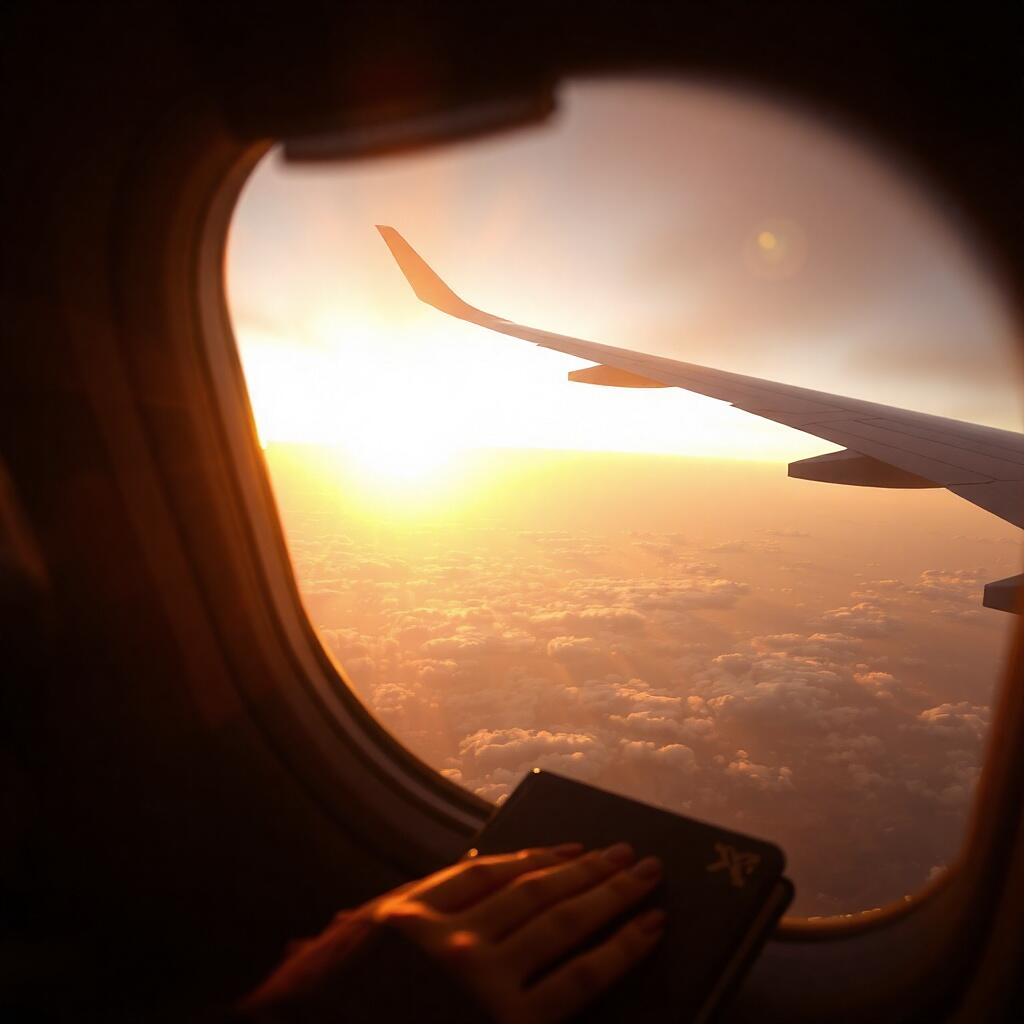
This story, “Flight Above the Past,” describes my emotional journey. I was sitting in seat 14A on a Boeing 777. I looked down at the clouds from ten thousand meters. For fifteen years, I worked as a geological engineer in the North. My hands were stained with the dust of diamond mines. Now, I felt the beautiful weightlessness of a life in transition. As an engineer, I understood the physics of the airplane wing. I knew the math behind the lift and the fuel consumption. But for the first time, I did not want formulas. I wanted the mystery of poetry. I was moving from the mechanical world toward a dream in France. Discover how I left my old identity behind to become the pilot of my own story.
Let iznad prošlosti: Laboratorij moje duše
Zvuk motora Boeinga 777 drugačija je frekvencija od tutnjave rudnika dijamanata, ali nosi istu poruku: više nisi na čvrstom tlu. Na deset tisuća metara visine, suspendirana između smrznutog sjećanja na Yukon i maglovitog obećanja Francuske, sjedila sam na sjedalu 14A, promatrajući oblake ispod sebe. Za putnike oko mene, ovo je bio samo let — most između dvije točke na karti. Za mene, to je bio laboratorij duše, mjesto gdje su se zakoni moje stare fizike polako rastapali.
Pogledala sam svoje ruke. Petnaest godina bile su umrljane crvenom prašinom bušotina i bijelom mašću industrijskih strojeva. Ribala sam ih sat vremena prije polaska na aerodrom, ali još uvijek sam mogla vidjeti fantomske linije svoje stare profesije urezane u zglobove. U automobilu osjetiš cestu. U vlaku osjetiš ritam tračnica. Ali u avionu, posebno tijekom prekooceanskog prelaska, osjetiš zastrašujuće, prelijepo bestežinsko stanje života u tranziciji.
Razmišljala sam o vožnji do aerodroma. Moj stari kamionet osjećao se kao odani pas kojeg ostavljam pred vratima. Vozila sam ga preko ledenih cesta koje su stenjale pod težinom čelika. U tom autu bila sam gospodar terena. Ali dok sam sjedila u kabini pod tlakom, shvatila sam da više nemam kontrolu. Bila sam putnik u vlastitoj sudbini.
Žena pored mene čitala je sjajni magazin i ponudila mi pristojan, distanciran osmijeh. Nije mogla znati da sjedi pored “kvara u sustavu”. Nije mogla znati da sam prije samo četrdeset osam sati stajala u jami od blata i dijamanata, računajući strukturalni integritet svijeta koji ona nikada neće vidjeti.
Pogledala sam kroz prozor u krilo aviona. Kao inženjer, znala sam matematiku iza uzgona. Znala sam za Bernoullijev princip i nevjerojatan stres pod kojim su te zakovice. Mogla sam izračunati potrošnju goriva i otpor. Ali po prvi put u životu, nisam željela matematiku. Željela sam misterij. Željela sam biti poput pjesnikinje u koju sam se pretvarala — netko tko gleda u krilo i vidi srebrno pero koje je nosi prema snu.
Na pola puta udarile su turbulencije. Nije bilo strašno, ali dovoljno da svjetla zatrepere. Žena pored mene je dahnula i uhvatila se za naslone za ruke, zglobovi su joj pobijeljeli. Osjetila sam kako mi se licem širi čudan, smiren osmijeh. Nakon petnaest godina gledanja kako se zemlja doslovno miče pod mojim nogama, mali zračni džepovi osjećali su se kao milovanje. Shvatila sam tada da mi je Sjever dao dar koji nisam očekivala: dar nepokolebljivosti. Ako možeš preživjeti zimu u kojoj sunce nestaje na mjesec dana, možeš preživjeti i malo trešnje na deset tisuća metara.
Otvorila sam bilježnicu. Tinta u mojoj olovci borila se s tlakom u kabini. Počela sam pisati o osobi koju ostavljam iza sebe. Pisala sam o inženjerki koja je mislila da se sve može riješiti formulom. Pisala sam o djevojci koja je nekada mislila da su dijamanti najdragocjenija stvar na zemlji, samo da bi shvatila da je vrijeme jedina valuta koja zaista vrijedi.
Dok je avion započeo svoj dugi silazak prema svjetlima Europe, shvatila sam da najvažnije stvari nisu u koferu. One su u onom “kvaru” koji nosim u prsima — tvrdoglavom, prelijepom odbijanju da me definira moja povijest.
Kotači su dotaknuli pistu uz definitivan udarac. Ljudi su odmah posegnuli za mobitelima, ispunjavajući kabinu digitalnim zvučnim signalima svijeta koji zahtijeva da bude primijećen. Ja sam čekala. Nisam posegnula za telefonom. Putovala sam tisućama kilometara, ali pravo putovanje bilo je onih nekoliko centimetara od moje glave do mog srca.
Izašla sam iz aviona na hladan, vlažan zrak novog kontinenta.
Više nisam bila inženjerka. Bila sam putnik. Bila sam pisac. Bila sam slobodna.
Ja sam Magma Star. Putnik koji je odlučio postati pilot svoje priče.
Više nisam bila inženjerka. Bila sam putnik. Bila sam pisac. Bila sam slobodna.
Ja sam Magma Star. Putnik koji je odlučio postati pilot svoje priče.
Un vol au-dessus du passé : Le laboratoire de mon âme
Le bourdonnement d’un Boeing 777 est d’une fréquence différente du grondement d’une mine de diamants, mais il porte le même message : vous n’êtes plus sur la terre ferme. À trente mille pieds, suspendue entre le souvenir gelé du Yukon et la promesse brumeuse de la France, j’étais assise au siège 14A, regardant les nuages en dessous de moi. Pour les passagers autour de moi, ce n’était qu’un vol — un pont entre deux points sur une carte. Pour moi, c’était un laboratoire de l’âme, un endroit où les lois de mon ancienne physique se dissolvaient lentement.
J’ai regardé mes mains. Pendant quinze ans, elles avaient été tachées par la poussière rouge des sites de forage et la graisse blanche des machines industrielles. Je les avais frottées pendant une heure avant de partir pour l’aéroport, mais je pouvais encore voir les lignes fantômes de mon ancienne profession gravées dans mes jointures. Dans une voiture, on sent la route. Dans un train, on sent le rythme des rails. Mais dans un avion, on ressent la terrifiante et magnifique apesanteur d’une vie en transition.
J’ai pensé au trajet en voiture jusqu’à l’aéroport. Mon vieux camion, qui avait survécu à des hivers impitoyables, me faisait l’effet d’un chien fidèle que j’abandonnais à la porte. Dans cette voiture, j’étais le maître du terrain. Mais assise dans la cabine pressurisée de l’avion, j’ai réalisé que je n’avais plus le contrôle. J’étais une passagère de ma propre destinée.
La femme assise à côté de moi lisait un magazine sur papier glacé. Elle n’aurait pas pu savoir qu’elle était assise à côté d’un “bug” du système. Qu’il y a seulement quarante-huit heures, je me tenais dans une fosse de boue et de diamants, calculant l’intégrité structurelle d’un monde qu’elle ne verrait jamais.
J’ai regardé par la fenêtre l’aile de l’avion. En tant qu’ingénieur, je connaissais les mathématiques derrière la portance. Mais pour la première fois de ma vie, je ne voulais pas des mathématiques. Je voulais le mystère. Je voulais être comme la poétesse que je devenais — quelqu’un qui regarde l’aile et voit une plume d’argent la transportant vers un rêve.
À mi-chemin, les turbulences ont frappé. La femme à côté de moi a haleté et s’est agrippée aux accoudoirs. J’ai senti un étrange sourire calme s’étaler sur mon visage. Après quinze ans à regarder la terre bouger littéralement sous mes pieds, de petites poches d’air me faisaient l’effet d’une caresse. J’ai réalisé alors que le Nord m’avait fait un cadeau : le don d’être inébranlable.
J’ai ouvert mon carnet. J’ai commencé à écrire sur la personne que je laissais derrière moi. J’ai écrit sur l’ingénieur qui pensait que tout pouvait être résolu avec une formule. J’ai écrit sur la fille qui croyait autrefois que les diamants étaient les choses les plus précieuses sur terre, pour réaliser que le temps est la seule devise qui compte vraiment.
Alors que l’avion entamait sa longue descente vers les lumières de l’Europe, j’ai réalisé que les choses les plus importantes n’étaient pas dans la valise. Elles étaient dans ce “bug” que je portais dans ma poitrine — le refus têtu et magnifique d’être définie par mon histoire.
Les roues ont touché le tarmac. Les gens ont immédiatement attrapé leurs téléphones. Moi, j’ai attendu. J’avais voyagé sur des milliers de kilomètres, mais le vrai voyage avait été les quelques centimètres de ma tête à mon cœur.
Je suis descendue de l’avion dans l’air frais et humide d’un nouveau continent.
Je n’étais plus ingénieur. J’étais une voyageuse. J’étais écrivain. J’étais libre.
Je suis Magma Star. Je suis la passagère qui a décidé de devenir le pilote de sa propre histoire.
Je n’étais plus ingénieur. J’étais une voyageuse. J’étais écrivain. J’étais libre.
Je suis Magma Star. Je suis la passagère qui a décidé de devenir le pilote de sa propre histoire.
Flight Over the Past: The Laboratory of My Soul
The hum of a Boeing 777 is a different frequency than the rumble of a diamond mine, but it carries the same message: you are no longer on solid ground. At thirty thousand feet, suspended between the frozen memory of the Yukon and the misty promise of France, I sat in seat 14A, watching the clouds beneath me. To the passengers around me, this was just a flight—a bridge between two points on a map. To me, it was a laboratory of the soul, a place where the laws of my old physics were slowly dissolving.
I looked at my hands. For fifteen years, they had been stained with the red dust of drill sites and the white grease of industrial machinery. I had scrubbed them for an hour before heading to the airport, but I could still see the phantom lines of my old profession etched into my knuckles. In a car, you feel the road. On a train, you feel the rhythm of the tracks. But in a plane, especially during a transatlantic crossing, you feel the terrifying, beautiful weightlessness of a life in transition.
I thought about the car ride to the airport. My old truck, a battered Ford that had survived winters that would have shattered a lesser vehicle, felt like a loyal dog I was abandoning at the gate. In that car, I was the master of the terrain. I knew every rattle, every trick to keep it moving when the temperature hit fifty below. But as I sat in the pressurized cabin of the plane, I realized I was no longer in control. I was a passenger in my own destiny.
The woman sitting next to me was reading a glossy magazine. She looked at me and offered a polite, distant smile. She couldn’t know that she was sitting next to a “glitch.” She couldn’t know that only forty-eight hours ago, I was standing in a pit of mud and diamonds, calculating the structural integrity of a world she would never see.
I looked out the window at the wing. As an engineer, I knew the math behind the lift. I knew about Bernoulli’s principle and the incredible stress those rivets were under. I could calculate the fuel consumption and the drag. But for the first time in my life, I didn’t want the math. I wanted the mystery. I wanted to be like the poet I was becoming—someone who looks at the wing and sees a silver feather carrying her toward a dream.
Midway through the flight, the turbulence hit. It wasn’t severe, but it was enough to make the coffee in the plastic cups ripple and the cabin lights flicker. The woman next to me gasped and gripped the armrests, her knuckles turning white. I felt a strange, calm smile spread across my face. After fifteen years of watching the earth literally move under my feet, a little air pockets felt like a caress. I realized then that the North had given me a gift I hadn’t expected: the gift of being unshakable. If you can survive a winter where the sun disappears for months, you can survive a little shaking at thirty thousand feet.
I opened my notebook. The ink in my pen was struggling with the cabin pressure, a tiny “glitch” of its own. I began to write about the person I was leaving behind. I wrote about the engineer who thought that everything could be solved with a formula. I wrote about the girl who once thought diamonds were the most precious things on earth, only to realize that time is the only currency that truly matters.
As the plane began its long descent toward the lights of Europe, I realized that the most important things weren’t in the suitcase or the overhead bin. They were in the “glitch” I was carrying in my chest—the stubborn, beautiful refusal to be defined by my history.
The wheels hit the tarmac with a definitive thud. The spell of the flight was broken. People immediately reached for their phones, the cabin filling with the digital pings and chirps of a world that demands to be noticed. I waited. I didn’t reach for a phone. I had traveled thousands of miles, but the real journey had been the few inches from my head to my heart.
I stepped off the plane and into the cool, damp air of a new continent.
I was no longer an engineer. I was a traveler. I was a writer. I was free.
I am Magma Star. I am the passenger who decided to become the pilot of her own story.
I was no longer an engineer. I was a traveler. I was a writer. I was free.
I am Magma Star. I am the passenger who decided to become the pilot of her own story.